Crypto Wallet Approvals Explained: The Hidden Permission Beginners Often Ignore
When you first start using crypto, you quickly learn to guard your seed phrase and keep your private keys offline. Those are important habits. But there is another layer of risk that most beginners overlook entirely: wallet approvals.
Every time you connect your wallet to a decentralized application and interact with it, you are often signing a permission that allows a smart contract to move your tokens. That permission is called a token approval. Understanding how it works is one of the most practical things you can do to protect yourself in the crypto space.
What Is a Token Approval
A token approval is a type of on-chain permission. When you grant one, you are telling the blockchain that a specific smart contract address is allowed to access a certain token in your wallet.
Think of it like giving a trusted shop the authority to charge your account. You are not handing over your wallet. You are authorizing a third party to pull a specific amount of funds when needed.
In the world of decentralized finance, this is necessary for many things to work. When you swap tokens on a decentralized exchange, the exchange's smart contract needs permission to move your tokens before it can complete the trade. That permission is the approval.
The approval itself is a transaction recorded on the blockchain. It costs a small gas fee and remains active until you revoke it or it is replaced.
Why Approvals Are Often Set to Unlimited
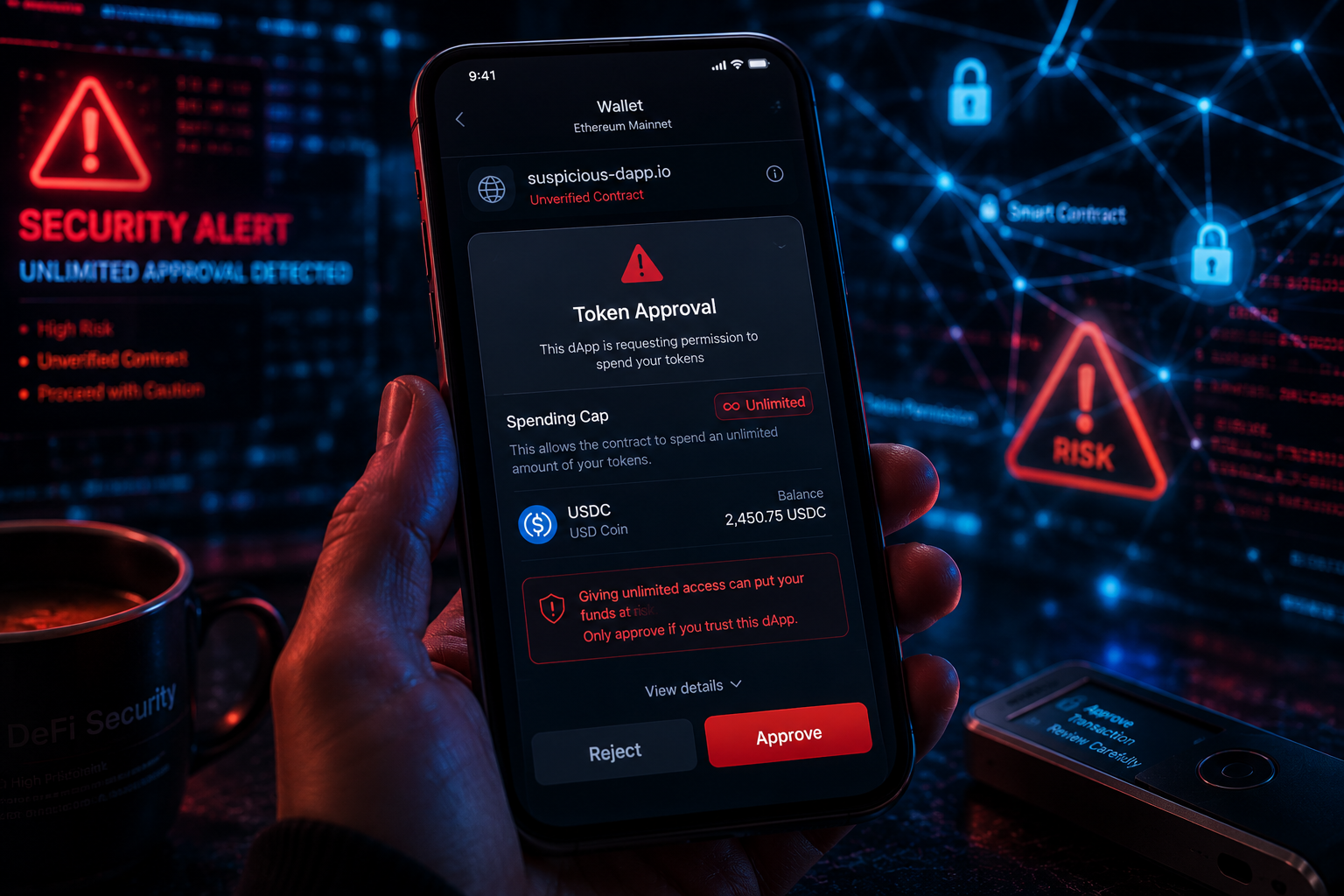
Here is where things get important for beginners. When a decentralized application asks for your approval, it often requests an unlimited amount by default.
This means the smart contract is not just authorized to move the tokens needed for one transaction. It is authorized to move every token of that type in your wallet, at any time, for as long as the approval exists.
Applications do this for convenience. If you only approved the exact amount needed each time, you would have to sign a new approval transaction every single time you used the platform. Unlimited approvals reduce friction and save on gas fees.
The problem is that this convenience comes with real risk. If the smart contract you approved is later exploited, upgraded maliciously, or was a scam from the start, that unlimited access becomes a direct path to your funds.
How Scammers Abuse Token Approvals
Token approvals have become one of the most common tools in crypto scams. The reason is simple: once you have signed an approval, the attacker does not need your private key. They already have permission to move your tokens.
One common method involves fake decentralized applications. A scammer builds a site that looks like a legitimate platform. You connect your wallet, interact with it, and without realizing it, you sign an approval granting the scammer's contract unlimited access to your tokens. The site may appear to work normally. The drain happens later, sometimes days after your visit.
Another method involves phishing links shared on social media or in community groups. These links lead to malicious sites that trigger approval requests disguised as routine interactions.
Some attacks are more sophisticated. A legitimate protocol may be exploited through a vulnerability, and the attacker uses existing approvals granted by users to drain funds without needing to compromise individual wallets.
In all of these cases, the approval you signed is the entry point. This is why understanding and managing your approvals is not optional. It is a core part of wallet safety.
How to Check and Revoke Your Approvals
The good news is that approvals can be revoked. There are tools designed specifically for this purpose. Platforms like Revoke.cash allow you to connect your wallet, see a full list of active approvals across different networks, and cancel any that you no longer need or do not recognize.
You should make it a habit to review your approvals periodically. If you have been active in decentralized finance, you may be surprised by how many approvals have accumulated over time.
When revoking an approval, you will pay a small gas fee for each revocation since it is an on-chain transaction. This is a worthwhile cost for the security it provides.
Some hardware wallets and wallet interfaces also display approval details before you sign, giving you a chance to review what you are authorizing. Always read these screens carefully before confirming.
Beginner Safety Note
If you are new to crypto and just starting to explore decentralized applications, here are the most important things to keep in mind about approvals.
Never approve unlimited access unless you fully trust the platform and understand what you are signing. When a wallet asks you to approve a token amount, look for an option to set a custom amount instead of accepting the default unlimited figure.
Be cautious with new or unfamiliar platforms. Research a project before connecting your wallet. Look for audits, community reputation, and how long the project has been active.
Use a separate wallet for exploring new applications. Keep your main holdings in a wallet that you do not connect to unknown sites. This limits your exposure if something goes wrong.
Review your active approvals regularly, especially after periods of heavy activity in decentralized finance.
Common Mistakes to Avoid
Accepting every approval request without reading it is one of the most frequent errors beginners make. The approval screen is not just a formality. It contains real information about what you are authorizing.
Assuming that disconnecting your wallet removes all approvals is another common misunderstanding. Disconnecting a wallet from a site only removes the site's ability to see your address and request new signatures. It does not cancel existing on-chain approvals. Those remain active until you revoke them.
Ignoring approvals on networks outside of Ethereum is also a mistake. Token approvals exist on every EVM-compatible blockchain, including BNB Chain, Polygon, Avalanche, and others. If you are active across multiple networks, you need to check approvals on each one separately.
Finally, waiting until something goes wrong before reviewing your approvals puts you at unnecessary risk. The time to manage permissions is before an incident, not after.
A Balanced View
Token approvals are not inherently dangerous. They are a necessary part of how decentralized applications function. Without them, many of the tools that make decentralized finance useful simply would not work.
The risk comes from unlimited approvals granted to unverified contracts, combined with a lack of awareness about how to manage them. When you understand what you are signing and take a few minutes to review your permissions regularly, approvals become a manageable part of using crypto safely.
The broader lesson here is that crypto gives you direct control over your assets. That control comes with responsibility. Learning about token approvals is one part of building the knowledge you need to use that responsibility well.
No tool or habit eliminates all risk. But staying informed, reading what you sign, and keeping your approvals clean are practical steps that meaningfully reduce your exposure to one of the most common attack vectors in the space today.